

Vacuum Furnaces vs. Atmosphere Furnaces: How They Work & When to Use Each
Vacuum and controlled atmosphere furnaces are used for a wide range of industrial heat treatment applications, but each technology offers distinct advantages depending on material sensitivity, surface finish requirements, and process control needs.
This guide explains how vacuum furnaces work, how they compare to controlled atmosphere furnaces, and when each option is the best choice, helping engineers and manufacturers make informed decisions before evaluating specific furnace designs.


What Is a Vacuum Furnace?
A vacuum furnace is an industrial heating system that removes air and reactive gases from the chamber to prevent oxidation, contamination, and unwanted chemical reactions during heat treatment.
Operating under low-pressure conditions allows vacuum furnaces to produce clean, bright surfaces and consistent metallurgical results, making them ideal for oxidation-sensitive alloys and precision components.
How Does a Vacuum Furnace Work?
Vacuum furnaces create a controlled, oxygen-free environment before heating begins. The basic process includes:
- Evacuating air and moisture from the chamber
- Uniform heating using electric heating elements
- Holding at temperature for metallurgical consistency
- Controlled cooling or inert gas quenching
This process minimizes oxidation, distortion, and surface discoloration.
Vacuum Heating Applications
Vacuum heating is commonly used for heat treatment processes that require precise temperature control and contamination-free results, including:
- Hardening
- Annealing
- Brazing
- Tempering
- Solution Treating
With a basic understanding of how vacuum furnaces work and where they are used, the next step is selecting the right furnace design for your application.
Presenting SC’s Vacuum Furnace Options

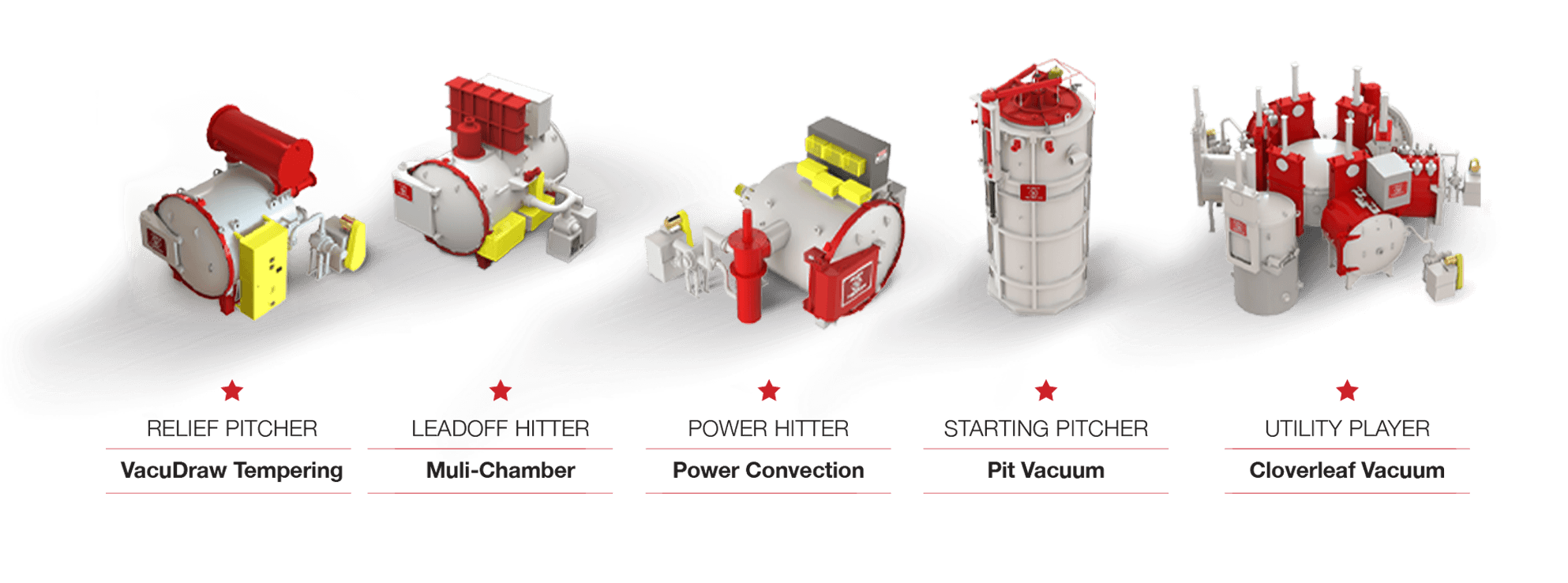
Power Convection®: The Rugged Industry Workhorse
- Best For: Tool Steels, Stainless Steels, Fuel system components, Medical, Electronics and Instrumentation
- Robust Construction & Safety: Engineered for durability and reduced loading risks
- Efficient Heat Transfer: Rapid, uniform heat transfer and efficient convection cooling for small and large workpieces
- Versatile & Customizable: Available in 2-6-bar and up to 10-bar designs, with rugged all graphite hot zones
- Quenching Pressure: 2, 6, 10 bar
- Temperature Range: 1000°F to 2400°F
- Ideal Industries: Automotive, Tooling, Molds and Dies, Medic

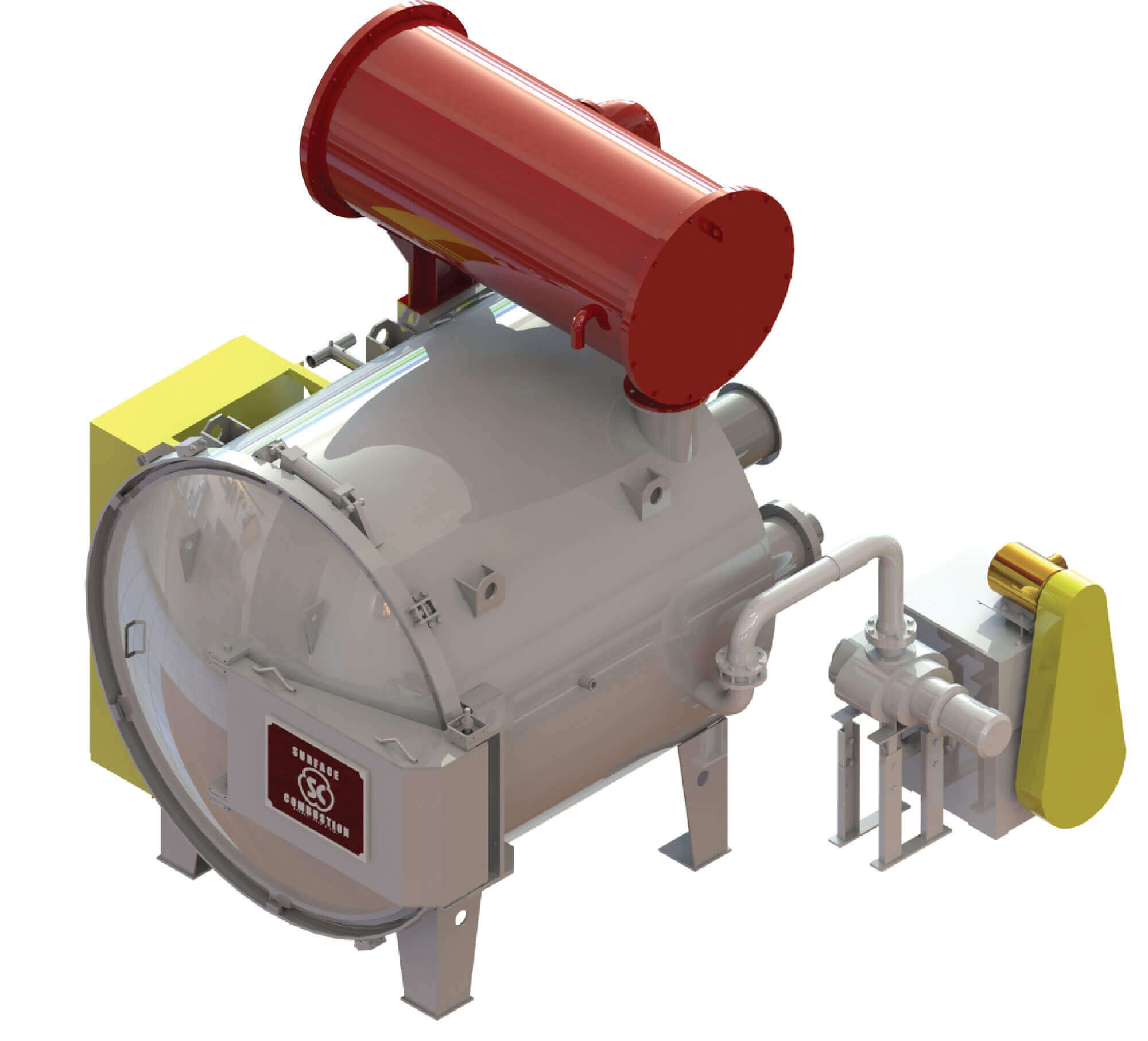
VacuDraw® Tempering: Industry's First Low Temperature, Cost-Effective Solution
- Best For: Copper, Tool Steels, Stainless Steels, Alloy Steels
- Cost Savings: More profitable cycles with significant cost
- Improved Efficiency: Convection heating slashes floor-to-floor time, optimizing production
- Enhanced Flexibility: Supports various atmospheres, processes bright loads without a diffusion
- Vacuum Level: 50 microns
- Quenching Pressure: 2 bar
- Temperature Range: 350°F to 1400°F
- Ideal Industries: Automotive
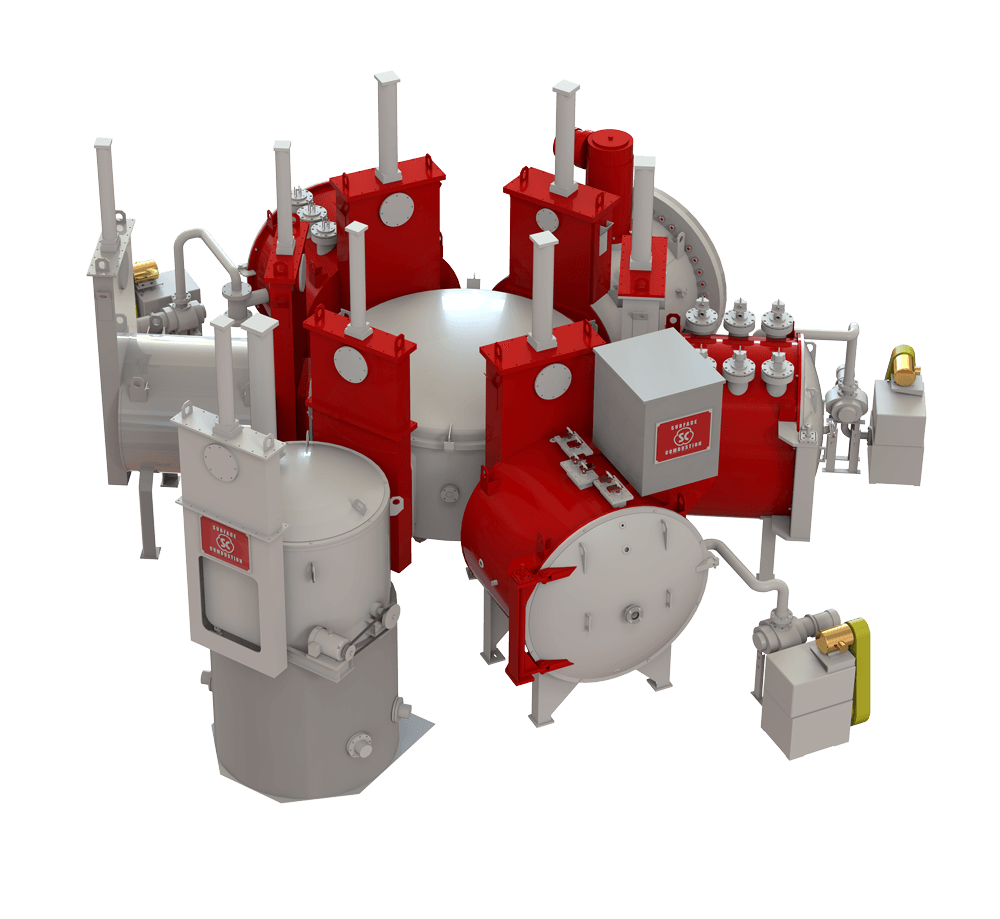
Cloverleaf™ Vacuum: Flexibility Meets Advanced Technology
- Best For: All materials including carburizing grades, hardening grades requiring oil quenching or gas quenching
- Versatile Heating Options: Gas-fired or electrically heated chambers cater to cost effective heating sources
- Advanced Automation: Precision control with central turret for streamlined material handling
- Reliable & Maintainable: Isolated maintenance capability ensures uninterrupted operation Chambers can be opened to atmosphere for inspections or servicing while the system is still in operation
- Vacuum Level: 20 Microns
- Quenching Pressure: Gas Quench Pressure up to 20 Bar or Oil Quench
- Temperature Range: 1000°F to 1800°F for Carb Chamber. 1000°F to 2400°F for High Purity High Temperature Chamber
- Ideal Industries: Automotive, Tooling, Molds and Dies

Multi-Chamber: Engineered for Reliability and Efficiency
- Best For: Tool steels, automotive fuel systems, stainless steels, low temperature vacuum processing of hard to keep bright stainless steels, including all materials requiring oil or gas quenching
- Hot Zone Integrity: Maximum integrity since the heating chamber stays under vacuum and at temperature at all times. Outside humidity and contamination never enters the hot zone while processing
- Flexible Quenching: Gas or oil quenching capabilities meet diverse vacuum processing requirements
- Enhanced Cooling: Superior cooling performance for increased productivity, higher part hardness, and faster turnaround
- Versatility in Application: Engineered for heavy loadings and large
- Direct-Fired Solutions: High velocity burners for fast, uniform
- Vacuum Level: 20 microns
- Quenching Pressure: Gas Quench Pressure up to 2 Bar or Oil Quench
- Temperature Range: 1000°F to 2400°F
- Ideal Industries: Automotive, Aerospace, Oil and Gas

Vacuum Allcase®: Industry’s Leading Batch Integral Quench Furnace
- Best For: Through Hardening, Carburizing, Carbonitriding, Annealing, Ferritic Nitrocarburizing
- Industry Expertise: Most installed units in the US, setting the standard since the 1950s
- Versatile Processing: Handles multiple heat treating processes in one furnace
- Advanced Quenching: Automatic transfers to various quenching media under protective atmospheres to prevent oxidation
- Enhanced Features: Larger capacities, improved insulation, and advanced control systems
- Automation and Compatibility: Equipped for automated processing with adaptable batch systems for diverse workpieces
- Vacuum Level: 20 Microns
- Quenching Pressure: Oil Quench Oil (No Pressure or Bar)
- Temperature Range: 1000°F to 1950°F
- Ideal Industries: Automotive
SoftVac™ Vacuum Furnace: Pioneering Hot Wall Vacuum Technology
- Best For: Annealing, Hardening, Low Pressure Carburizing, Stress Relieving
- Enhanced Efficiency: Features hot wall technology to reduce thermal loss and improve temperature and case depth uniformity
- High-Temperature Capability: Reaches up to 1975°F, supporting high-temperature applications with advanced temperature control
- Flexible Atmospheres: Operates with Vacuum, Nitrogen, Nitrogen/Hydrogen, or Air, catering to various industrial needs
- Multi-Chamber Options: Available in single, 2, 3, and 4 chamber configurations to fit multiple-stage processing requirements
- Vacuum Level: 20 Microns
- Quenching Pressure: Gas Quench 1.5 Bar
- Temperature Range: 1000°F to 1975°F
- Ideal Industries: Automotive, Research and Development

Vacuum Pit Furnace: Custom and Standard Solutions for Diverse Industrial Needs
- Best For: Carburizing, Nitriding, Ferritic Nitrocarburizing
- Customizable Designs: Offers both standard and engineered pit furnaces tailored to specific industrial requirements
- Capacity and Size: Standard models handle up to 30,000 lbs., with dimensions ranging from 24 to 120 inches in diameter and 36 to 144 inches deep
- Versatile Applications: Suitable for large workpieces and small parts in baskets; ideal for atmosphere and direct-fired applications
- Advanced Features: Equipped with high velocity burners for direct-fired operations and proprietary high-temperature fans for efficient heat distribution
- Robust and Reliable: Built with heavy plate casings and steel plate lids to enhance durability and operational efficiency
- Complete System Solutions: Includes companion equipment such as washers, temper furnaces, and quenches for a comprehensive heat treat line
- Vacuum Level: 20 Microns
- Quenching Pressure: Gas Quench Pressure 2 bar
- Temperature Range: 1000°F to 2400°F
- Ideal Industries: Aerospace, Space Exploration, Aeronautical, Energy, and Oil
Carbottom Furnace
- Best For: Annealing, Hardening, Tempering, Stress Relieving, Heat Treating Large Castings and Forgings
- Advanced Loading Mechanism: Facilitates easy and seamless loading and unloading, perfect for heavy and large batch operations.
- High-Temperature Capability: Operates across a broad temperature range from 300°F to 2200°F, accommodating various materials and processes.
- Atmosphere Control: Specializes in precise atmosphere conditions using options like RX® and DX® gases and various nitrogen mixtures for optimal material properties.
- Energy Efficiency: Incorporates recuperative technology, improving efficiency by up to 29%, reducing both operational costs and environmental impact.
- Durability and Longevity: Built with robust materials for durability, with many units proven to operate effectively for over fifty years.
- Vacuum Level: 50 microns
- Quenching Pressure: Gas Quench to 1 bar
- Temperature Range: 300°F to 2200°F
- Ideal Industries: Aerospace, Automotive, Heavy Machinery, Rail, and Shipbuilding

How to Choose the Right Furnace for Your Application
Choosing between a vacuum furnace and a controlled atmosphere furnace depends on your material, process requirements, and production goals.
Understanding these differences helps narrow the right furnace technology before evaluating specific furnace designs and configurations.
Frequently Asked Questions About Vacuum & Atmosphere Furnaces
A vacuum furnace is an industrial furnace that removes air and reactive gases from the heating chamber to prevent oxidation, contamination, and unwanted chemical reactions during heat treatment. This controlled environment produces clean surfaces and consistent metallurgical results.
A vacuum furnace works by evacuating air from the chamber before heating begins, then raising the temperature using electric heating elements. Parts are held at precise temperatures for a controlled period and cooled using regulated cooling or inert gas quenching to achieve the desired material properties.
Vacuum heating is the process of heating materials in a low-pressure, oxygen-free environment. This method minimizes oxidation and surface discoloration while improving temperature uniformity and metallurgical consistency during heat treatment.
Vacuum furnaces are commonly used for hardening, annealing, brazing, tempering, and solution treating. These processes benefit from the clean, controlled environment vacuum furnaces provide, especially for oxidation-sensitive alloys.
A controlled atmosphere furnace uses protective gases—such as nitrogen, hydrogen, or endothermic/exothermic gas mixtures—to regulate the chemical environment inside the heating chamber during heat treatment, rather than removing air entirely.
The primary difference is how the heating environment is controlled. Vacuum furnaces remove air to eliminate oxidation, while atmosphere furnaces use protective gases to manage chemical reactions. Vacuum furnaces are often chosen for clean, precision applications, while atmosphere furnaces are commonly used for higher-throughput or gas-based heat treatment processes.
Vacuum furnaces are best suited for oxidation-sensitive materials, precision heat treatment, and applications requiring clean surface finishes. Controlled atmosphere furnaces are often preferred for higher-volume production and processes such as carburizing or nitriding where specific gas interactions are required.


Choose Excellence, Choose Surface Combustion
Surface Combustion stands at the forefront of thermal processing technology, offering a comprehensive range of vacuum and atmosphere furnaces to meet and exceed your production needs. Whether you require the precision of vacuum environments or the versatility of atmosphere processing, our equipment is designed to deliver unparalleled quality, efficiency, and reliability.
Discover the future of material processing with Surface Combustion.
