Angle Image

T6 Heat Treatment

T6 heat treatment is a three-step thermal process applied to non-ferrous  alloys to significantly increase their strength and hardness. By heating, rapidly quenching, and artificially  aging the metal, the T6 heat treatment creates a microstructural change that precipitates hard, finely dispersed phases (precipitates) in the microstructure, increasing mechanical  strengths by 2-3 times. The T6 heat treatment process can also be applied to wrought aluminum alloys containing magnesium and silicon (6000 series) copper (2000 series), zinc (7000 series), or aluminum castings alloyed with silicon (A356 and A380).  These apply respectively to AMS 2770 for wrought aluminum parts and AMS 2771 for aluminum alloy castings.  Other non-ferrous materials such as titanium alloys  also benefit from T6 Solution Heat Treatment.

Contact Us About Your T6 Heat Treating Needs

The T6 Heat Treat Process Steps

The T6 heat treatment process is designed to increase the strength of aluminum alloys and is composed of three main stages: Solutionizing, quenching, and artificial aging.

1. Solution Heat Treatment (Solutionizing)

In this crucial first step, the alloy material is heated to a high temperature of typically 930–1020°F (500–550°C) for several hours to dissolve alloying elements uniformly into a solid solution. The holding phase of this step can range from 1–12 hours, which ensures complete dissolution of strengthening particles.

2. Quenching

In this step, the hot component, casting, or part is rapidly cooled (quenched), usually by quenching in water or polymer solutions, such as glycol, heated to 120–212°F (50–100°C). This rapid cooling event freezes, or “locks”, the alloy’s microstructure elements in place, eliminating long-range diffusion of the alloying elements, thereby creating a supersaturated solid solution.

3. Artificial Aging

The third step of T6 heat treatment involves reheating the quenched aluminum alloy material to an intermediate temperature of typically 300–400°F (150–200°C) to accelerate precipitation hardening. The alloy is held at these temperatures for a specific duration of time, in the range of 3–10 hours but sometimes as much as 24 hours. Artificial aging accelerates the natural aging process and works to maximize hardness and tensile strength by allowing tiny strengthening particles to form throughout the metal. The alloying elements form into highly-coherent clusters and subsequently evolve into larger semi-coherent precipitates, maximizing strength and toughness

Applications

The T6 heat treatment transforms ordinary aluminum into high-strength components through careful, precise heating and cooling steps. This process delivers an exceptional strength-to-weight ratio while maintaining workability for many industries. In fact, T6 heat treatment can double or triple the strength of aluminum without adding weight. This makes T6 heat treating a best heat treat method for non-ferrous metal parts and components that will be used in aerospace, automotive, and structural applications where both strength and weight are important.

For Aluminum die casting operations, T6 heat treatment is a critical process step that is growing. Previously, only 20% of aluminum castings were heat treatable. In the past 10 years, almost 80% of all aluminum castings are heat treatable. The predominant aluminum alloy for die casting is A356, therefore T6 heat treatment of A356 aluminum castings has seen tremendous growth.

For 2000 series wrought aluminum, an application is 2219-T62. That is a 2000 series aluminum with T6 heat treatment for aerospace applications.

Engineers typically specify T6 heat treatment when they need to achieve aluminum alloy or metal parts that can deliver maximum strength to handle heavy loads, while remaining light-weight. So, for non-ferrous metal parts that need to deliver maximum strength, T6 is the best heat treatment choice because it yields better strength results.

Have questions about the T6 heat treating process or selecting the right thermal process equipment for your application?

Contact us to talk to an expert

Surface Combustion Furnaces for T6 Heat Treating

Which industrial heat treat furnaces does Surface Combustion engineer and manufacture for T6 heat treatments? The Surface Combustion VersaQuench® Quick Quench Furnace and the proven Surface Combustion Uni-DRAW® Batch Tempering Furnace are considered leaders in the industry.

Durable, proven heat treat equipment is essential for T6 heat treating because the timing and temperatures must be precise for each alloy – even small variations can affect the final properties of the metal.

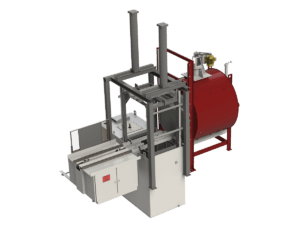
The VersaQuench® Quick Quench Furnace is a high-performance batch furnace designed for heat treating and annealing of aluminum and non-ferrous materials. VersaQuench features a compact, round, obstruction-free chamber, rapid atmosphere recirculation, and a robust, fast-acting hydraulic elevator to minimize quench delay. The VersaQuench incorporates Surface’s mechanical motion, standard chain and handler head design which is the industry standard for repeatable, automatic quench transfers. The furnace chamber is Class 2 (+/-10F) and quench transfer times (quench delay) of 10-15 seconds are available options. Heating options are direct-fired gas heating or electric heating with a nitrogen option. VersaQuench is capable of processing both cast and wrought products, suitable for T6 heat treatment.

Learn more about the VersaQuench®

Surface® Combustion Uni-DRAW® Batch Tempering Furnace

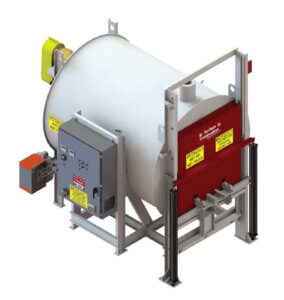
The Uni-DRAW® Batch Tempering Furnace is for the artificial aging step in the T6 heat treatment. The Uni-DRAW originally was originally concepted as a companion furnace to the Allcase® Batch Integral Quench Furnace. The Uni-DRAW is designed for pre-heating, tempering, and aging. The Uni-DRAW can also be used as a stand-alone heat-treating system and in a T6 heat treatment cell. The Uni-DRAW® Batch Tempering Furnace’s patented cylindrical design provides a circular wind flow pattern that ensures excellent wind distribution throughout the furnace, resulting in temperature uniformity within the effective workload area. Heating options include direct-fired gas, indirect gas heat in radiant tubes, or electric heating with nitrogen atmosphere optional.

Learn more about the Uni-DRAW®

Heat Treating Processes and Equipment

Learn more about the range of heat treat processes as well as the full line of Surface Combustion heat treat furnaces available for your application needs by referencing our Furnace Selection Guide.

Move Forward With Surface

We’re here to help. Surface Combustion is your heat treat equipment partner and expert knowledge resource as your company makes plans for innovation and growth.